Winter Bird Feeding: A Small-Space Setup Checklist
SpartanShopper · November 10, 2026
Plan a small-space bird-feeding setup around window safety, cleaning access and local wildlife guidance before choosing a feeder.
A small-space winter bird-feeding setup starts with safe placement and a cleaning plan, not the feeder. Check local wildlife advisories, address nearby glass and make sure you can reach every part of the feeder without leaning from a window or using an unsafe position. If those checks do not work, birdwatching without feeding is a good alternative.
Affiliate disclosure: SpartanShopper may earn a commission from purchases through links on this page, at no extra cost to you. As an Amazon Associate, we earn from qualifying purchases.
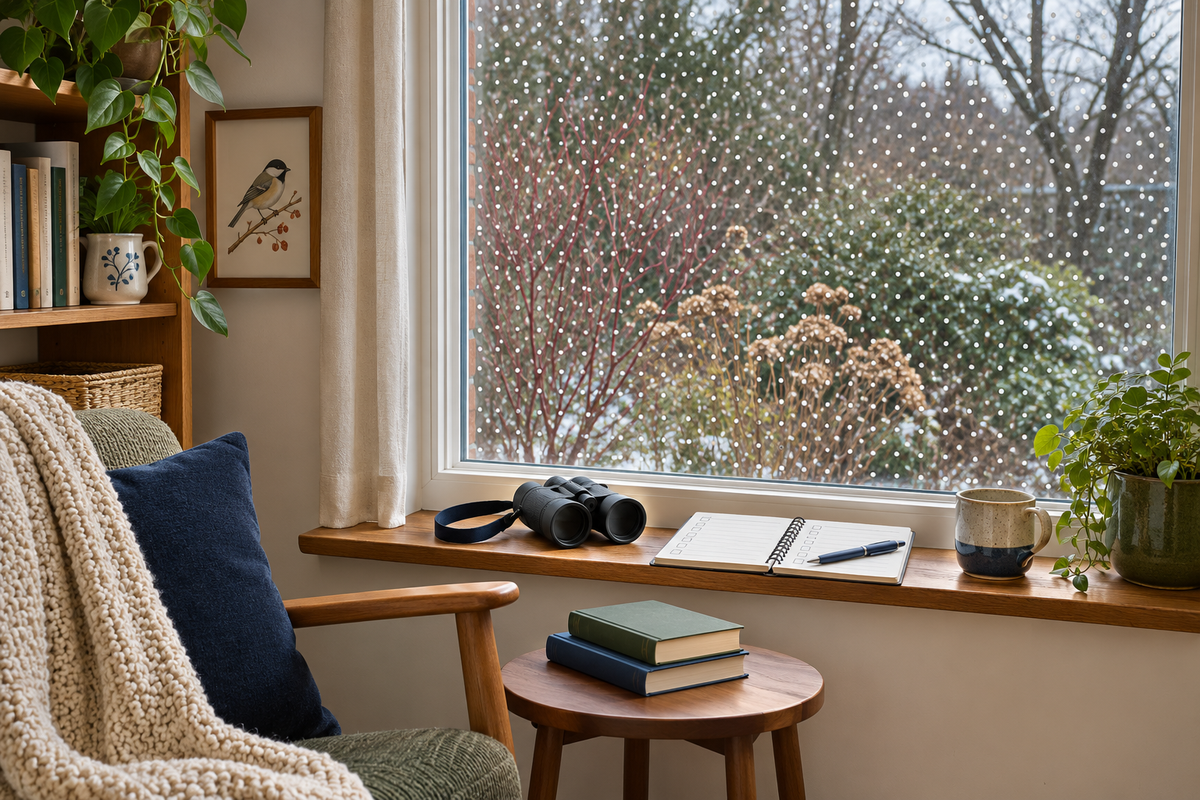
The cover image is an AI-generated editorial illustration, not a photograph of the linked product or proof of a tested project.
Check current guidance for your location
Wildlife conditions vary by region and can change during the season. Check your state wildlife agency or local wildlife-health authority for feeding restrictions or disease advice before putting food out. If you keep poultry, seek the relevant biosecurity guidance rather than treating a general songbird article as permission to place feeders nearby.
Cornell’s 2026 avian-influenza guidance distinguishes typical feeder birds from more affected groups, but that does not establish that feeding is risk-free. Disease, predators and window collisions are separate concerns. Use current local advice, and reassess when conditions change.
Treat the window as part of the setup
Reflected sky and vegetation can make glass hazardous to birds. The U.S. Fish and Wildlife Service recommends treating windows to prevent collisions; where windows cannot be treated, feeders within three feet reduce the distance available for birds to build speed. Close placement is not a guarantee that a collision cannot occur.
Use a current bird-safe window-treatment guide rather than relying on a few widely spaced decorative stickers. Check the whole area birds can approach, including adjacent panes. The illustration on this page is conceptual and is not an installation specification for dot spacing or coverage.
Choose something you can actually clean
Look for removable parts, accessible corners and a way to remove wet or spoiled seed. Decide where the feeder will be cleaned and dried before refilling. A large hopper that is awkward to take apart can be a poor fit for a small home even if it needs fewer refills.
The Fish and Wildlife Service advises cleaning seed feeders at least every two weeks, removing discarded seed beneath them and taking feeders down if birds appear sick. Wet conditions or visible contamination may require more attention. Follow the feeder maker’s material-care instructions and authoritative disinfection guidance; never mix cleaning chemicals.
One optional window-feeder example
The Nature Anywhere window feeder listing describes a clear acrylic design, suction-cup mounting and a slide-out seed tray. That can make the contents visible and provide access for refilling, but the product does not remove the need for safe glass, cleaning and correct installation.
Check that your window and access arrangement meet the maker’s mounting instructions. Do not rely on a seller’s long-term suction claim as a guarantee. Inspect the installation regularly, avoid placing it where a fall could injure someone, and remove it if safe maintenance is impractical.
Check the Nature Anywhere regular window-feeder listing
Choose food for the birds you observe
Identify the birds already using the area, then consult a regional bird organization about suitable food and feeder type. Keep seed dry and protected in storage. Buy a manageable quantity rather than a large bag that will sit in a damp corner for months.
A window feeder is not a universal feeder for every species. Avoid assuming that a mixture advertised for many birds will attract all of them to your window. Record what you actually see and adjust only within current local guidance.
Keep a simple observation notebook
Write down the date, weather, species you can identify and any maintenance you performed. If a bird seems ill or injured, contact the appropriate local wildlife authority or licensed rehabilitator for guidance rather than handling it casually. Follow their instructions about pausing feeding.
If you decide feeding is unsuitable, you can still watch birds from a window, learn their calls or support native planting where your property and local guidance allow. The enjoyable part is noticing the wildlife around you; buying a feeder is optional.
Compare binocular magnification for birdwatching
Explore other small-space winter hobbies
Sources and product checks
Product information was checked against the exact retail listings and the sources below on November 9, 2026. These are researched planning and buying guides, not hands-on product tests. Check the selected variant, included items, current price and instructions before ordering.
Cornell: avian influenza and bird feeders
Get Exclusive Coupon Codes
Deals and discount codes delivered to your inbox. No spam.
Get a Free Healthy Snack Box
Gluten-free, sugar-free, better-for-you snacks. No purchase required.
Claim My Free BoxSponsored offer. No purchase necessary.