8×42 vs. 10×42 Binoculars for Beginner Birding
SpartanShopper · November 6, 2026
Choose 8×42 or 10×42 binoculars for birding by comparing field of view, magnification, and glasses fit on two Celestron Nature DX models.
Start with 8×42 if you’re learning to find birds in trees or follow them as they move. Consider 10×42 if you mostly watch distant birds in open areas and can hold the view steady. With the Celestron Nature DX pair, you’re choosing between a wider view and greater magnification.
Affiliate disclosure: SpartanShopper may earn a commission from qualifying purchases. As an Amazon Associate, SpartanShopper earns from qualifying purchases.
What 8×42 and 10×42 mean
The first number tells you how much the binoculars magnify the scene. The second tells you the diameter of the front lenses in millimeters. Both models have 42 mm front lenses. The 10×42 makes a bird appear about 25% larger in each dimension than the 8×42 from the same spot. It also magnifies small hand movements, which can make fine details harder to see when you’re standing unsupported.
Compare the two Celestron Nature DX models
| Specification | Nature DX 8×42 | Nature DX 10×42 |
|---|---|---|
| Magnification | 8× | 10× |
| Field width at 1,000 yards | 388 ft | 304 ft |
| Eye relief | 17.5 mm | 14 mm |
| Published weight | 22.2 oz | 22.2 oz |
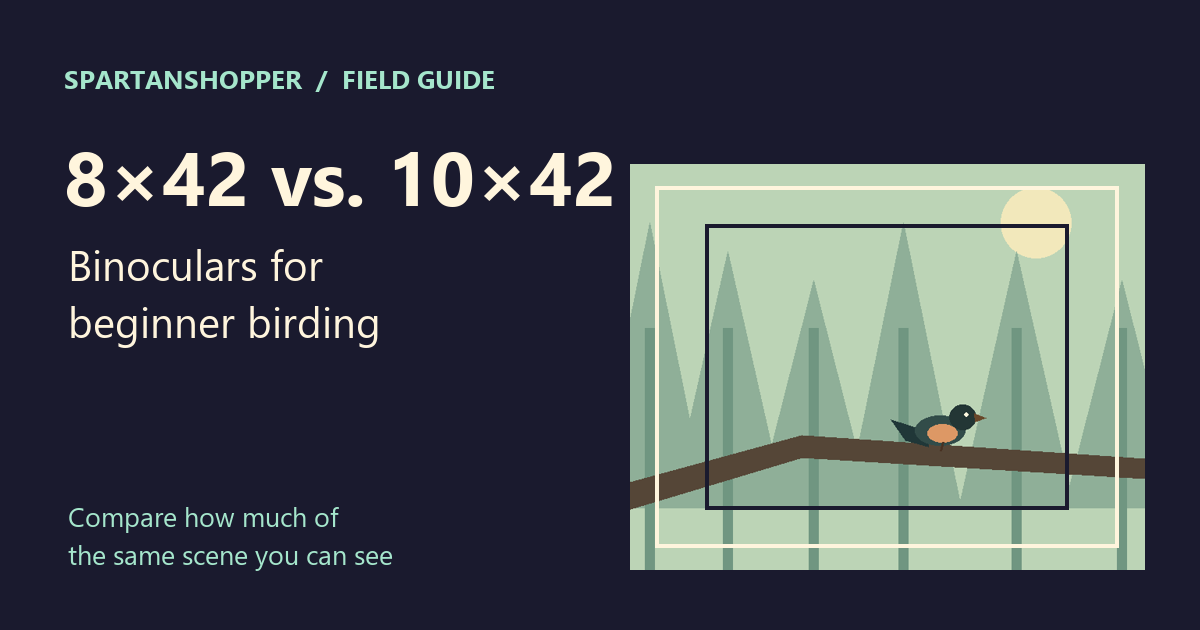
On these two models, the 8×42 shows 84 feet more width at 1,000 yards, or about 28% more than the 10×42. The 1,000-yard distance is a standard reference for the specification. The same difference in viewing angle matters at a backyard feeder. The numbers come from the manufacturer and apply to these exact models.
See the Celestron Nature DX 8×42 specifications and Celestron Nature DX 10×42 specifications.
Picture a bird hopping through branches
You see a bird land near the edge of a tree. When you raise the binoculars, a wider view gives you more of the surrounding branches to orient yourself. If the bird hops sideways, you have more room to follow it before moving the binoculars. That’s where I’d start for backyard birding and wooded trails.
At a pond, the choice can shift. If a duck is already easy to locate across open water, 10× magnification can help you inspect its markings. Try bracing your elbows on a railing where available. If you’re fighting a shaky image, the extra magnification may be less useful.
Check fit if you wear glasses
Eye relief is how far back your eye can sit and still take in the view. The 8×42 has more published eye relief in this comparison. If you wear glasses, try the binoculars with the eyecups lowered and check whether you can see the full circle without pressing the lenses against your glasses. Fit depends on your frames and how the binoculars sit on your face.
Try them before spring
Practice finding a bird at a feeder or from a window before taking the binoculars on a spring walk. The next Great Backyard Bird Count runs February 12–15, 2027, so there’s a winter occasion to use them too. Great Backyard Bird Count
Before ordering
- For a first pair focused on backyard birds and wooded trails, start with the standard Nature DX 8×42.
- For distant birds in open areas, consider the standard Nature DX 10×42 if you can hold it steady.
- Check the selected magnification and model family. Celestron also sells a Nature DX ED line with different specifications.
This comparison uses Celestron’s published specifications and illustrative birding scenarios. SpartanShopper has not tested the two binoculars side by side.
Get Exclusive Coupon Codes
Deals and discount codes delivered to your inbox. No spam.
Get a Free Healthy Snack Box
Gluten-free, sugar-free, better-for-you snacks. No purchase required.
Claim My Free BoxSponsored offer. No purchase necessary.