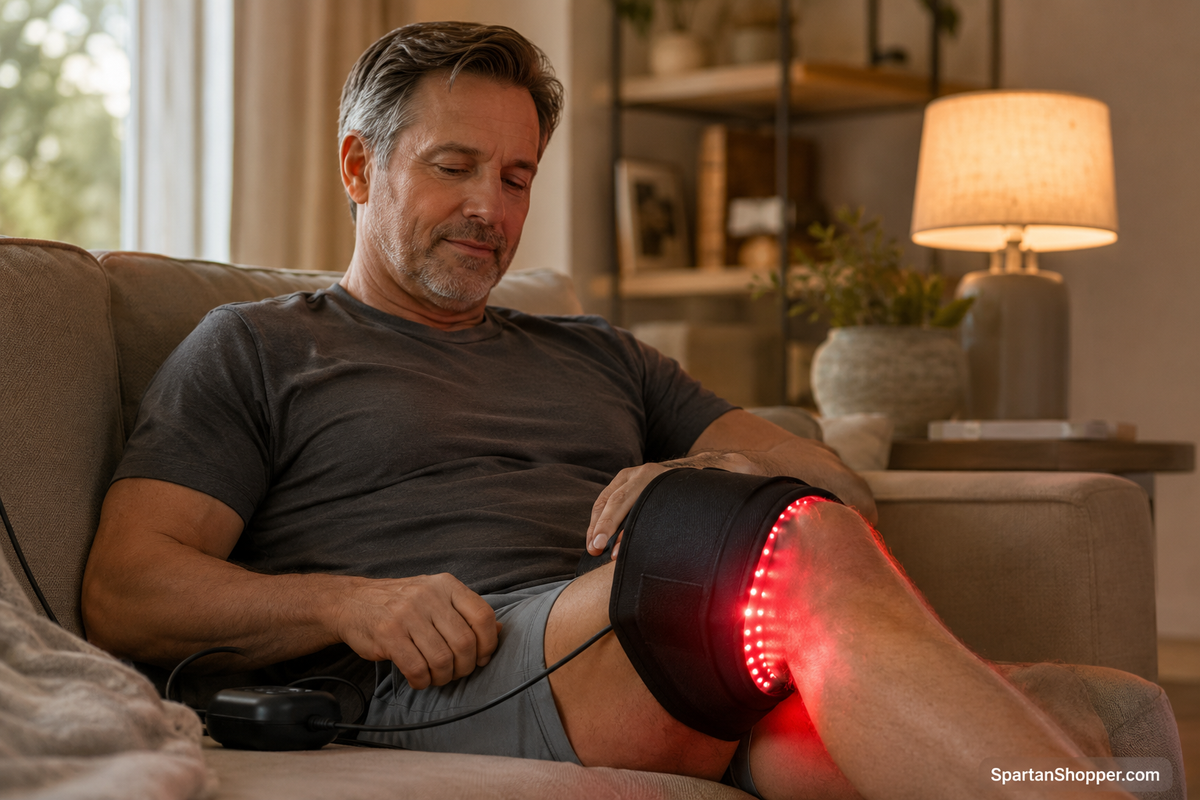
Red Light Therapy for Pain Relief: What the Evidence Actually Shows
SpartanShopper · August 15, 2026
Red light therapy has moved well beyond skincare — it's increasingly used for muscle recovery, joint pain, and chronic inflammation. Here's an honest look at what the evidence actually supports.
If you've mostly seen red light therapy marketed for wrinkles and skin tone, the pain-relief angle can feel like a separate product category entirely — and in a sense, it is. The devices are similar, but the audience, the use case, and importantly, the research behind it are genuinely different from the skincare application.
This guide focuses specifically on red light therapy for pain, soreness, and inflammation — not skin — because conflating the two does a disservice to anyone trying to figure out if this is actually worth the investment for a knee, a lower back, or recovery after training. If you're looking for the skincare application instead, see our LED face mask guide.
Red Light Therapy: The Actual Mechanism
Red light therapy (sometimes called low-level laser therapy or photobiomodulation) uses specific wavelengths of red and near-infrared light — typically in the 630-670nm and 810-850nm ranges — to penetrate skin and, to a limited depth, underlying tissue. The proposed mechanism is that this light stimulates mitochondrial activity in cells, which may support tissue repair and reduce localized inflammation.
It's worth being precise about the mechanism because it explains both what red light therapy can plausibly do and what it can't. Near-infrared light penetrates only a few centimeters into tissue — deep enough to plausibly affect muscles and some joint tissue, not deep enough to meaningfully reach, say, a deep hip joint or spinal disc from a surface-mounted panel.
The Research, Condition by Condition
This is the section most red light therapy marketing skips, so it’s worth being direct: the evidence base for pain relief is real but mixed, and it varies significantly by condition.
Where the evidence is reasonably solid:
- Muscle recovery and delayed-onset soreness (DOMS) — Multiple studies on athletes and recreational exercisers have found that red/near-infrared light therapy, applied before or after exercise, is associated with reduced muscle soreness and faster perceived recovery compared to placebo.
- Localized joint pain (particularly knee osteoarthritis) — Several clinical trials have found modest but measurable pain reduction and improved function in knee osteoarthritis patients using red/near-infrared light therapy, though effect sizes vary considerably between studies.
- Minor soft tissue injuries — There's reasonable evidence for red light therapy supporting soft tissue healing (sprains, minor strains) as a complementary approach, generally as one part of a broader recovery plan rather than a standalone treatment.
Where the evidence is thinner or more mixed:
- Chronic lower back pain — Results are inconsistent across studies; some show modest benefit, others show no significant difference from placebo. This is a condition with many possible underlying causes, which likely explains some of the inconsistency.
- Fibromyalgia and widespread chronic pain — Limited, smaller studies show some promise, but the research base is not yet robust enough to draw strong conclusions.
- Deep joint pain (hip, deep shoulder) — Given the limited tissue penetration depth of red/near-infrared light, the plausibility of meaningful effect on deeper joints is lower, and research specifically on these areas is sparser.
None of this means red light therapy doesn’t work — it means the honest answer is "it depends on what you’re treating," which is a less exciting headline than most marketing copy offers, but it’s the accurate one.
Most Likely to Benefit
- Athletes and regular exercisers dealing with normal training soreness and recovery — this is where the evidence is strongest and most consistent.
- People with mild-to-moderate knee osteoarthritis looking for a non-drug complement to their existing treatment plan.
- Anyone recovering from a minor soft tissue injury, used alongside standard care, not instead of it.
Reasons to Stay Skeptical
- Anyone expecting it to resolve chronic, complex, or undiagnosed pain — red light therapy is not a substitute for proper diagnosis, and pain that hasn't been evaluated by a doctor shouldn't be self-treated with a light panel as a first response.
- Anyone with deep joint or spinal pain expecting significant relief — the physics of light penetration make this a harder case, and expectations should be modest.
- Anyone on photosensitizing medication (certain antibiotics, acne medications, some heart medications) — these can increase sensitivity to light exposure, including red/near-infrared light. Check with a doctor or pharmacist before starting.
Matching the Device to the Pain Point
Since this guide is specifically about pain rather than skin, the target area matters more than the device category. Here are three options built for distinct pain locations, rather than one-size-fits-all panels:
Feet and Plantar Fasciitis: HAIYUE Red Light Therapy Boot
Shop on Amazon | $234.99 | 4.3★ | 54 reviews
Foot pain is one of the more underserved areas in red light therapy content — most guides default to face masks or generic panels, but a boot-style device that wraps the entire foot addresses a genuinely different, common pain point. The wrap format means consistent contact and coverage across the sole and top of the foot, rather than trying to hold a flat panel against an oddly-shaped area.
Best for: plantar fasciitis, general foot and ankle soreness, or standing-all-day foot fatigue.
Shoulder Pain: Viconor Red Light Therapy for Shoulder
Shop on Amazon | $69.99 | 4.5★ | 22 reviews
The shoulder wrap combines 660nm red and 850nm near-infrared LEDs with adjustable heat and light intensity in a wearable, gender-neutral format that works on either shoulder.
Best for: rotator cuff soreness, shoulder stiffness, and post-workout shoulder recovery.
Lower Back and Core: Cosytime Red Light Therapy Mat
Shop on Amazon | $79.99 | 4.4★ | 80 reviews
This is a wrap-style mat (26" x 13") rather than a rigid belt, with an adjustable elastic strap that secures around the back, waist, or legs. It uses a combined 660nm red / 850nm near-infrared LED matrix with adjustable intensity and a built-in auto-shutoff timer. The wrap format means it can move with you rather than requiring you to stay still against a fixed panel, which matters for a lower-back application specifically.
Best for: lower back pain, core-area soreness, and general lumbar support during recovery — flexible enough to also wrap the waist or legs.
Quick Comparison
| Product | Target Area | Price | Rating | Best For |
|---|---|---|---|---|
| HAIYUE Red Light Therapy Boot | Feet/Ankle | $234.99 | 4.3★ | Plantar fasciitis, foot fatigue |
| Viconor Red Light Therapy for Shoulder | Shoulder | $69.99 | 4.5★ | Rotator cuff, shoulder recovery |
| Cosytime Red Light Therapy Mat | Lower Back/Core | $79.99 | 4.4★ | Lower back pain, lumbar support |
Safety and Precautions
Red light therapy is generally considered safe for most people when used as directed — it doesn't use UV light, so it doesn't carry the skin cancer risk associated with tanning devices. That said:
- Eye protection matters for higher-powered panels — check the specific device's guidance, since some near-infrared wavelengths can be uncomfortable or risky for direct, prolonged eye exposure.
- Pregnancy — there isn't robust safety research specific to red light therapy during pregnancy; check with a doctor before use.
- Active cancer or recent radiation treatment — light-based therapies in general should be discussed with an oncologist first, given potential interactions with treatment.
- Realistic timeline — most studies showing benefit use consistent sessions over several weeks, not a single use. If you're trying it for a specific issue, give it a fair, consistent trial (per your device's guidance) before deciding whether it's working.
FAQ
How long before red light therapy helps with pain?
Most research protocols use daily or near-daily sessions over 2-4 weeks before evaluating effect for conditions like knee osteoarthritis or chronic soreness. A single session is unlikely to show meaningful results for anything beyond acute, minor soreness.
Is red light therapy better than heat or ice for pain?
They work through different mechanisms and aren't necessarily competing options — heat and ice address inflammation and blood flow acutely, while red light therapy's proposed benefit is more about supporting cellular repair over repeated sessions. Many people use both as part of a broader approach rather than choosing one exclusively.
Can I use red light therapy every day?
For most consumer devices, daily use within the manufacturer's recommended session length is considered safe. Check your specific device's guidance, since power output and recommended exposure time vary significantly between products.
Does insurance cover red light therapy devices?
Some are FSA/HSA eligible, but this varies by device and by your specific plan — check with your provider or FSA/HSA administrator directly rather than assuming.
Final Verdict
The honest takeaway on red light therapy for pain: it's a legitimate, evidence-supported tool for specific use cases — muscle recovery, mild-to-moderate knee osteoarthritis, minor soft tissue healing — and a much shakier bet for chronic, complex, or deep pain that hasn't been properly diagnosed. It's worth trying as a complement to, not a replacement for, appropriate medical care, with realistic expectations about what a few weeks of consistent use is likely to actually change.
Disclosure: SpartanShopper participates in the Amazon Associates Program. We may earn a small commission on qualifying purchases at no extra cost to you. This article is for informational purposes only and is not a substitute for professional medical advice.
Get Exclusive Coupon Codes
Deals and discount codes delivered to your inbox. No spam.
Get a Free Healthy Snack Box
Gluten-free, sugar-free, better-for-you snacks. No purchase required.
Claim My Free BoxSponsored offer. No purchase necessary.