Psyllium Husk for Weight Loss: What the Research Actually Shows
Gut Health

Psyllium Husk for Weight Loss: What the Research Actually Shows

SpartanShopper · May 23, 2026

Psyllium husk isn't a fat burner. But the research on fiber, appetite, and caloric intake tells a more interesting story than most supplement marketing lets on. Here's what it actually does.

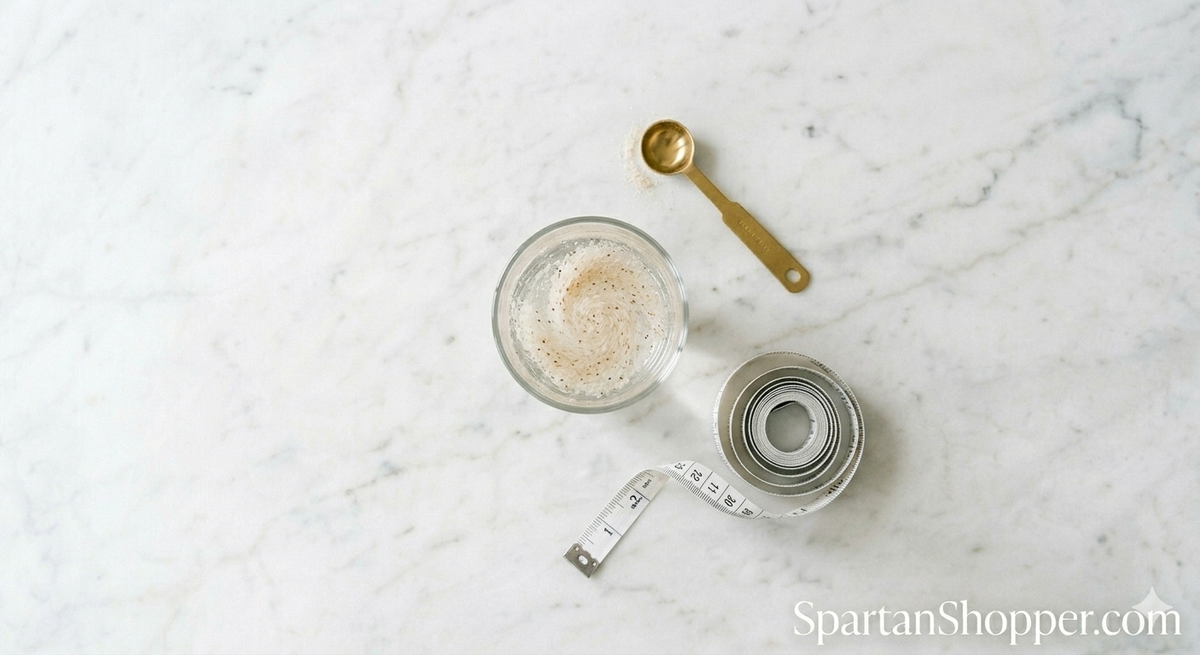
Psyllium husk powder mixed in a glass of water next to a measuring tape on a white marble surface
Psyllium husk and a measuring tape — fiber's role in weight management is more nuanced than most supplements.

Psyllium husk for weight loss is one of the more nuanced supplement topics you'll find — because unlike most weight loss supplements, psyllium husk actually has clinical research behind it. The mechanism is real. The effect size is modest. And the way most people use it is wrong.

This guide covers what the research actually shows, the correct way to use psyllium for appetite control, and what to realistically expect.

How Psyllium Husk Affects Weight

Psyllium husk is not a fat burner, metabolism booster, or appetite suppressant in the pharmaceutical sense. What it is: a gel-forming soluble fiber that affects satiety through several well-documented mechanisms.

Mechanism 1: Gastric Emptying Delay

When psyllium husk contacts water in your stomach, it forms a thick viscous gel. This gel slows the rate at which your stomach empties its contents into the small intestine — a process called gastric emptying delay.

Slower gastric emptying means:

  • You feel full longer after eating
  • Post-meal hunger returns more slowly
  • You're less likely to snack between meals

Multiple studies have demonstrated that psyllium supplementation before meals reduces caloric intake at that meal and extends the time to next hunger.

Mechanism 2: Blood Sugar Stabilization

The psyllium gel also slows the absorption of carbohydrates from the small intestine, flattening the post-meal blood sugar spike and the subsequent crash. This blood sugar stabilization effect reduces the sharp hunger that follows a rapid glucose spike — the kind of hunger that sends you back to the kitchen an hour after a meal.

Mechanism 3: Appetite Hormone Effects

Emerging research suggests psyllium fiber influences GLP-1 and PYY — hormones that signal satiety to the brain. The effect is modest compared to pharmaceutical GLP-1 agonists like semaglutide, but the mechanism is the same category.

What the Research Shows

A 2020 meta-analysis of 22 randomized controlled trials found that psyllium supplementation produced a statistically significant reduction in body weight, BMI, and waist circumference compared to placebo. The effect was modest — approximately 0.4–1.5 kg of additional weight loss over study periods of 4–24 weeks.

That's not dramatic, but it's real and consistent. And it's additive — psyllium works on top of whatever dietary approach you're already using, not instead of it.

A 2016 study in the Annals of Internal Medicine found that simply increasing fiber intake to 30g per day produced meaningful weight loss even without any other dietary changes — suggesting that fiber's effects on satiety are powerful enough to reduce caloric intake passively.

How to Use Psyllium Husk for Weight Loss

The key distinction from using psyllium for digestive health: timing matters more for weight loss than for regularity.

Optimal approach:

  1. Take 5g psyllium husk in 16 oz of water
  2. 30 minutes before your largest meal
  3. Drink the full glass immediately after mixing

The 30-minute window allows the gel to form and begin expanding in your stomach before food arrives, maximizing the satiety effect at the meal where you're most likely to overeat.

Dosage for weight management: 5g before your largest meal is the most studied approach. Going higher (10g) doesn't appear to meaningfully increase the satiety effect and increases the risk of digestive discomfort.

What won't work: Taking psyllium after meals, or without enough water. The gel formation is the mechanism — if you don't give it time and fluid to work, you don't get the satiety benefit.

Psyllium Husk vs. Weight Loss Supplements

SupplementMechanismEvidenceSafety
Psyllium huskSatiety via gel formation✅ Strong✅ Excellent
GlucomannanSatiety via gel formation✅ Moderate✅ Good
Green tea extractMild thermogenesis⚠️ Weak⚠️ Liver risk at high doses
Garcinia cambogiaClaimed appetite suppression❌ Not supported⚠️ Liver risk
Raspberry ketonesClaimed fat metabolism❌ No human evidence⚠️ Unknown

Psyllium husk and glucomannan are the only fiber supplements with meaningful clinical evidence for weight management. Psyllium has a larger body of research and a longer safety record.

Best Psyllium Husk Products for Weight Management

SpartanShopper is reader-supported. When you buy through links on our site, we may earn an affiliate commission at no extra cost to you.

NOW Foods Psyllium Husk Capsules — Most Convenient

Taking capsules 30 minutes before a meal is easier to maintain as a daily habit than mixing powder. At 700mg per capsule, you need 7 capsules to reach 5g — take with 16 oz of water.

Shop NOW Foods Psyllium Husk Capsules on Amazon

Organic India Whole Husk Psyllium — Best Clean Powder

One teaspoon (5g) mixed into 16 oz of water 30 minutes before your largest meal. Neutral flavor mixes well with water or can be added to a smoothie.

Shop Organic India Whole Husk Psyllium on Amazon

ColonBroom — Best for Combined Gut Health and Weight Management

If your weight management goals are tied to bloating, irregular digestion, or gut dysbiosis, ColonBroom's prebiotic-enhanced psyllium formula addresses both simultaneously.

Shop ColonBroom on Amazon

Realistic Expectations

Be honest with yourself about what psyllium husk can and can't do:

What to expect:

  • Reduced hunger and improved satiety, especially after meals
  • More stable energy levels from flattened blood sugar spikes
  • Modest additional weight loss (0.5–1.5 kg) over several months compared to not using it
  • Improved digestive regularity as a side benefit

What not to expect:

  • Rapid weight loss
  • Fat burning or metabolism boosting
  • Results without dietary changes
  • A substitute for caloric deficit

Psyllium husk is a tool that makes it easier to eat less — not a supplement that burns fat independently. Used correctly, it's one of the better-evidenced additions to a weight management approach. Used as a magic bullet, it will disappoint.

Frequently Asked Questions

Does psyllium husk reduce belly fat specifically?

Studies showing waist circumference reduction suggest psyllium contributes to abdominal fat reduction, but this is likely a result of overall caloric reduction rather than targeted belly fat burning. There is no supplement that reduces belly fat selectively.

How long does psyllium husk take to show weight loss results?

The satiety effect is immediate from the first dose. Measurable weight loss effects in studies typically appear after 4–8 weeks of consistent daily use before meals.

Should I take psyllium husk before or after meals for weight loss?

Before meals — specifically 30 minutes before your largest meal. Taking it after meals provides digestive benefits but does not produce the pre-meal satiety effect that drives the weight management benefit.

Can psyllium husk replace other weight loss supplements?

It can replace supplements with no evidence behind them (garcinia cambogia, raspberry ketones) without losing anything. It competes well with other fiber-based satiety supplements like glucomannan. It cannot replace pharmaceutical interventions like GLP-1 agonists for people who need significant weight loss.

Is psyllium husk safe to take daily for weight loss long term?

Yes. Psyllium husk is safe for indefinite daily use and carries no dependency risk. It's one of the few weight management supplements that can genuinely be used long term without concern.

Final Verdict

Psyllium husk is one of the most evidence-backed fiber supplements for weight management, but the mechanism is satiety — not fat burning. Take 5g in a large glass of water 30 minutes before your largest meal, maintain it consistently for 4–8 weeks, and combine it with a caloric deficit for meaningful results.

For the complete guide on psyllium husk dosage across all use cases, see our psyllium husk dosage guide. For how psyllium compares to MiraLax and other fiber options, see our psyllium husk vs MiraLax comparison.

Disclosure: SpartanShopper participates in the Amazon Associates Program. We may earn a small commission on qualifying purchases at no extra cost to you. This article is for informational purposes only and is not a substitute for professional medical advice. Always consult your healthcare provider before beginning a new supplement routine.

Get Exclusive Coupon Codes

Deals and discount codes delivered to your inbox. No spam.