Mechanic Shop Organization: How the Pros Label Their Toolboxes
SpartanShopper · May 9, 2026
A disorganized shop costs real money — in lost time, missed tools, and frustrated techs. Here's how professional mechanics actually set up their toolbox labeling systems, and the one upgrade that makes the biggest difference.
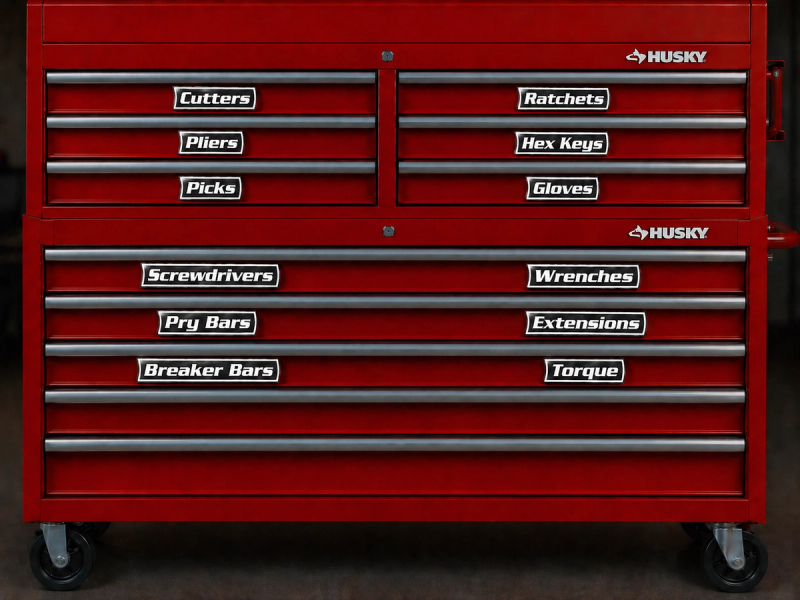
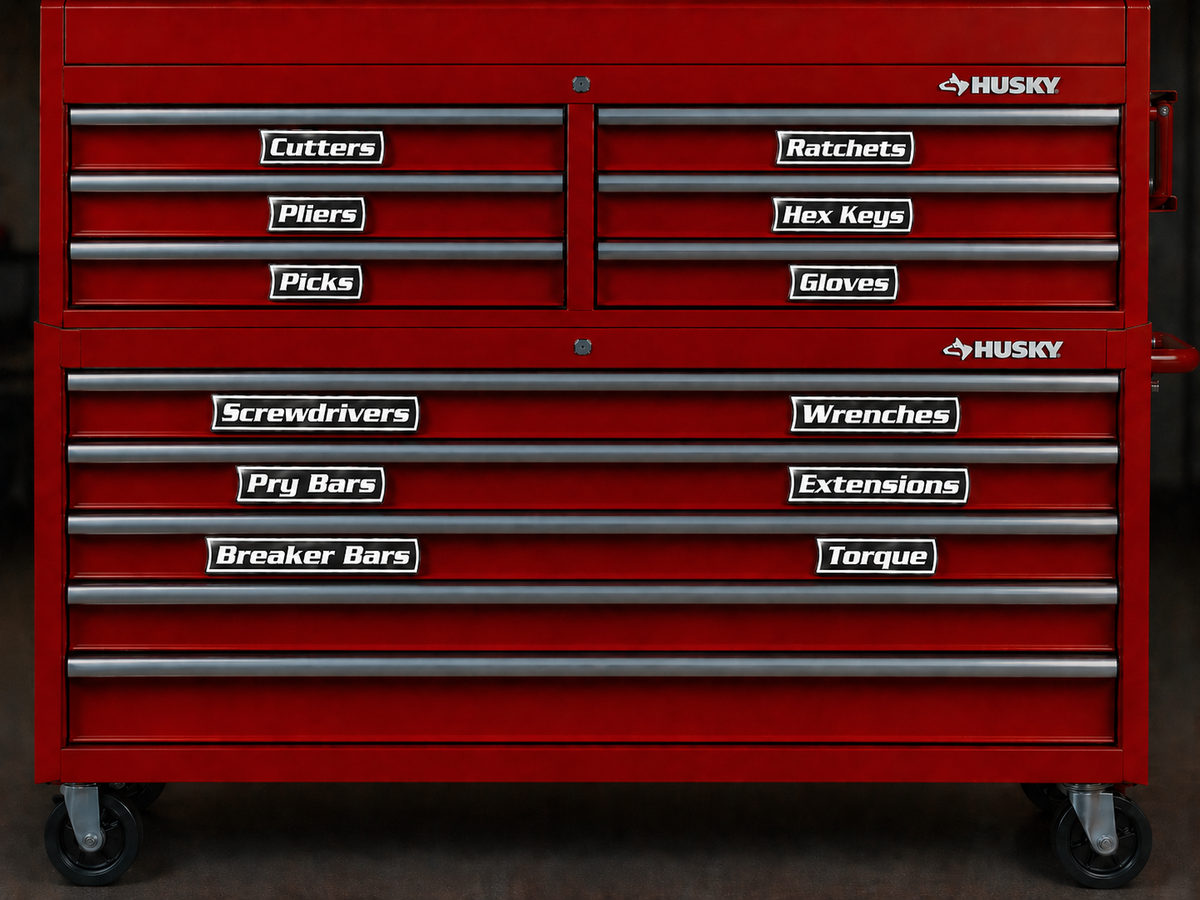
Walk into any high-volume professional auto shop and you'll notice something immediately: the toolboxes are labeled. Not with masking tape and marker — with clean, consistent, readable labels on every drawer. That's not an accident. Professional mechanics label their toolboxes because time is money, and hunting through unlabeled drawers costs both.
Mechanic shop organization is a discipline in itself. The best shops run like well-oiled machines — every tool has a home, every drawer has a label, and every tech knows exactly where to reach without thinking. This guide breaks down how the pros do it, what systems work in a real shop environment, and the labeling upgrade that makes the biggest difference.
Why Shop Organization Matters More Than You Think
In a professional shop, a mechanic's time is billed by the hour. Every minute spent hunting for a tool is a minute not spent on the vehicle — which means lost revenue for the shop and frustration for the tech.
Studies of shop efficiency consistently show that tool organization is one of the highest-leverage improvements a shop can make. A well-organized toolbox reduces average tool retrieval time from 30–60 seconds to under 5 seconds. Across a full work day, that adds up to 30–45 minutes of recovered productive time per tech.
For a shop with 4–6 techs, that's 2–4 hours of recovered billable time per day. The math on a good labeling system pays for itself within the first week.
The Professional Mechanic's Toolbox Organization System
Professional mechanics don't organize by brand or when they acquired tools — they organize by job function. Every drawer maps to a specific task or tool category, and the labels reflect that system.
Here's how most professional shops organize a standard rolling chest:
Top Chest (Upper Cabinet)
The top chest typically handles the smallest, most frequently accessed tools. Professional mechanics keep these drawers organized by:
- Sockets — separated by drive size (1/4", 3/8", 1/2"), then by standard vs. metric, then by depth (shallow vs. deep)
- Ratchets and extensions — grouped by drive size
- Hex keys and specialty bits — SAE and metric separated
- Small hand tools — picks, hooks, small pliers
Bottom Roll Cart (Lower Cabinet)
The bottom cart handles larger tools and less frequently accessed items:
- Wrenches — combination, box-end, open-end, separated by SAE and metric
- Pliers and cutters — needle nose, channel lock, diagonal cutters, wire strippers
- Screwdrivers — flathead and Phillips separated, organized by size
- Pry bars and breaker bars — bottom drawer for longer tools
- Electrical tools — multimeters, test lights, wire crimpers
- Torque wrenches — separate drawer, protected from impact
- Specialty tools — job-specific tools grouped together
Side Cabinet / Hutch
- Fluids and chemicals — clearly labeled for safety
- Shop supplies — gloves, rags, tape
- Manuals and documentation
Why Professional Mechanics Use Magnetic Labels
Adhesive labels are common in home garages. They're rare in professional shops — and for good reason.
In a professional environment, tool organization isn't static. Shops add new tools, reorganize workflows, and adapt to new vehicle platforms constantly. A labeling system that can't adapt quickly becomes a liability. Adhesive labels peel, leave residue, and require scraping and reapplication every time something changes.
Magnetic labels solve this problem entirely. Professional mechanics use magnetic labels because:
- They reposition instantly — when a drawer's contents change, the label changes with it. No scraping, no residue, no reprinting.
- They survive shop conditions — oil, heat, vibration, and daily drawer slams don't affect a quality N52 magnetic label
- They read from distance — white-on-color typography is readable from across the shop floor, not just up close
- They look professional — a labeled toolbox signals a professional operation to customers and coworkers alike
The Label System Professional Shops Use
The best professional shop labeling systems share three characteristics:
1. One color, consistently applied. Mixing label colors across a toolbox looks disorganized. Pros pick one color — red, black, or blue — and apply it uniformly across every pack and every drawer. The consistency is what makes the system read as organized rather than random.
2. Function-based labels, not brand-based. Labels identify what's in the drawer, not what brand it is. "Wrenches" not "Snap-On." "Sockets" not "Craftsman." The drawer contents may change over time — the function doesn't.
3. Readable at a glance from distance. A label that requires you to walk up and squint defeats the purpose. Professional shops use labels with high-contrast typography — white text on saturated backgrounds — that read instantly from across the shop floor.
VoltariTek Labs — Built for Professional Shop Use
VoltariTek Labs is the magnetic label system built specifically for professional shop environments. Made in Oregon with exposed N52 neodymium magnets — the strongest commercially available grade — VoltariTek labels hold through the most demanding shop conditions without sliding or failing.
Why VoltariTek is the pro choice:
- Exposed N52 magnets — direct steel contact, ~3 lbs combined hold per label
- 1-year hold guarantee — professional reliability backed by warranty
- Pre-built themed packs — organized around real shop workflows, not generic categories
- Three colors — Workshop Red, Heritage Black, Cobalt Blue
- Custom labels — $2.50/label for specialty tools and shop-specific categories
The packs built for mechanic shops:
| Pack | Labels | Best For | Price |
|---|---|---|---|
| Automotive Hand Tools | 12 | Main chest hand tool organization | $22.99 |
| Automotive Sockets | 12 | Socket drawer organization by drive/depth | $24.99 |
| Automotive Service & Fluids | 10 | Service workflow and consumables | $19.99 |
| Electrical & Fasteners | 15 | Electrical components and hardware | $24.99 |
| Hazmat & Shop Chemicals | 14 | Chemical storage and safety | $24.99 |
| General Essentials | 15 | Crossover tools and general shop use | $24.99 |
Most professional mechanic setups use 3–4 packs to cover a full rolling chest and side cabinet. The Automotive Hand Tools, Automotive Sockets, and Hazmat & Shop Chemicals packs cover the core of most shop configurations.
Use code VTEK25 for 25% off at voltaritek.com.
Setting Up a Professional Shop Labeling System
Here's the process professional mechanics use when setting up or reorganizing a toolbox labeling system:
Step 1 — Organize first, label second. Get every tool into its correct drawer before touching a label. Labels document organization — they don't create it. Labeling a disorganized drawer just makes it a labeled disorganized drawer.
Step 2 — Map your drawers on paper first. Before applying labels, sketch out which drawer gets which label. This prevents repositioning and ensures a logical flow from top to bottom.
Step 3 — Choose your color and commit. Pick Workshop Red, Heritage Black, or Cobalt Blue and use it across every pack. Don't mix.
Step 4 — Apply labels at consistent height. Center labels horizontally on the drawer face, at the same vertical position across all drawers. Consistency in placement makes the whole chest read as one organized system.
Step 5 — Test before finishing. Slam each drawer 4–5 times after applying labels. N52 exposed magnets don't move — if a label shifts, reposition it slightly to find better steel contact.
Step 6 — Add custom labels for specialty tools. VoltariTek's custom label option ($2.50/label) covers shop-specific categories that don't fit standard packs — specialty pullers, diagnostic equipment, brand-specific tools.
Mechanic Shop Organization Beyond the Toolbox
Labeling the toolbox is the foundation — but a fully organized shop goes further:
Parts storage — magnetic labels work on any steel shelving unit. Label parts bins, hardware drawers, and supply shelves with the same system for a unified shop aesthetic.
Wall-mounted tool storage — pegboards and shadow boards benefit from the same labeling discipline. Label sections by tool category for fast visual inventory.
Fluid and chemical storage — always label chemical storage clearly. VoltariTek's Hazmat & Shop Chemicals pack covers the most common shop chemicals and safety labels.
Shared shop tools — in multi-tech shops, labeling shared equipment (floor jacks, specialty tools, diagnostic equipment) reduces conflicts and improves accountability.
Frequently Asked Questions
What labels do professional mechanics use?
Most professional mechanics use magnetic labels for their toolboxes — specifically N52 grade with exposed magnets for maximum hold. VoltariTek Labs produces the strongest magnetic labels currently available for professional shop use.
How do I organize a mechanic toolbox?
Organize by job function first — sockets by drive size and depth, wrenches by type and size, hand tools by category. Then label each drawer to document the system. See our full guide to labeling toolbox drawers for a step-by-step walkthrough.
What is the best magnetic label for a tool chest?
The best magnetic labels for tool chests use exposed N52 neodymium magnets with direct steel contact. See our full best magnetic labels for tool chests guide for a complete breakdown.
Do magnetic labels work on Snap-On toolboxes?
Yes — Snap-On roll carts and side cabinets use ferrous steel and are fully compatible with N52 magnetic labels.
How many label packs does a professional mechanic need?
Most full professional setups (rolling chest + side cabinet) use 3–5 packs depending on tool count and specialization. The Automotive Hand Tools, Automotive Sockets, and Hazmat packs cover the core of most shop configurations.
Can I get custom labels for specialty shop tools?
Yes — VoltariTek Labs offers custom labels at $2.50 each with a $20 minimum and 3–5 day turnaround, up to 10 characters per label in all three colors.
Final Verdict
Professional mechanic shop organization starts with the toolbox — and the toolbox starts with labels. The pros use magnetic labels because they hold, they reposition, and they survive the conditions that destroy adhesive stickers. The shops that look the most organized aren't the ones with the most expensive tools — they're the ones with the most consistent systems.
For professional-grade magnetic toolbox labels made in Oregon with exposed N52 magnets and a 1-year hold guarantee, VoltariTek Labs is the clear choice for serious shop setups. Use code VTEK25 for 25% off your first order.
For more on building a complete toolbox labeling system, see our complete guide to magnetic toolbox labels.
Disclosure: SpartanShopper may earn a commission on purchases made through links in this article at no extra cost to you.
Disclosure: SpartanShopper participates in the Amazon Associates Program. We may earn a small commission on qualifying purchases at no extra cost to you. This article is for informational purposes only and is not a substitute for professional medical advice.
Get Exclusive Coupon Codes
Deals and discount codes delivered to your inbox. No spam.
Get a Free Healthy Snack Box
Gluten-free, sugar-free, better-for-you snacks. No purchase required.
Claim My Free BoxSponsored offer. No purchase necessary.
Related Coupons
SpyAssociates
$15 off $399+
SpyAssociates $15 Off Orders $399+
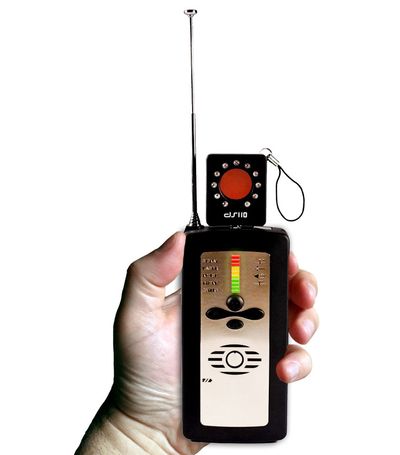
Save $15 on any SpyAssociates order over $399. Best applied to professional-grade detectors from SpyAssociates' premium lineup. Visit the page for the code.
End date not supplied — check with retailer
Confirm eligibility and the final price at checkout.
Shop Now →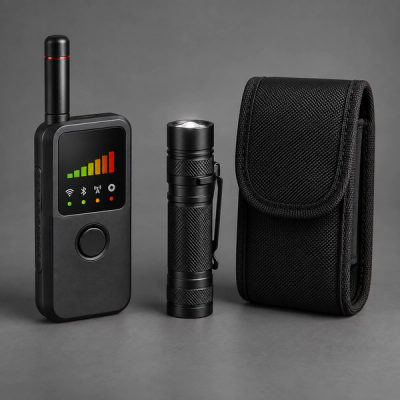
SpyAssociates
$10 off $99+
SpyAssociates $10 Off Orders $99+
Get $10 off any SpyAssociates order over $99. Works across their full catalog of bug detectors, GPS trackers, and security equipment. Visit the page for the code.
End date not supplied — check with retailer
Confirm eligibility and the final price at checkout.
Shop Now →SpyAssociates
5% off
SpyAssociates 5% Off Sitewide
Save 5% on your entire SpyAssociates order — no minimum required. Applies across the full catalog including bug detectors, GPS trackers, and counter-surveillance equipment. Visit the page for the code.
End date not supplied — check with retailer
Confirm eligibility and the final price at checkout.
Shop Now →