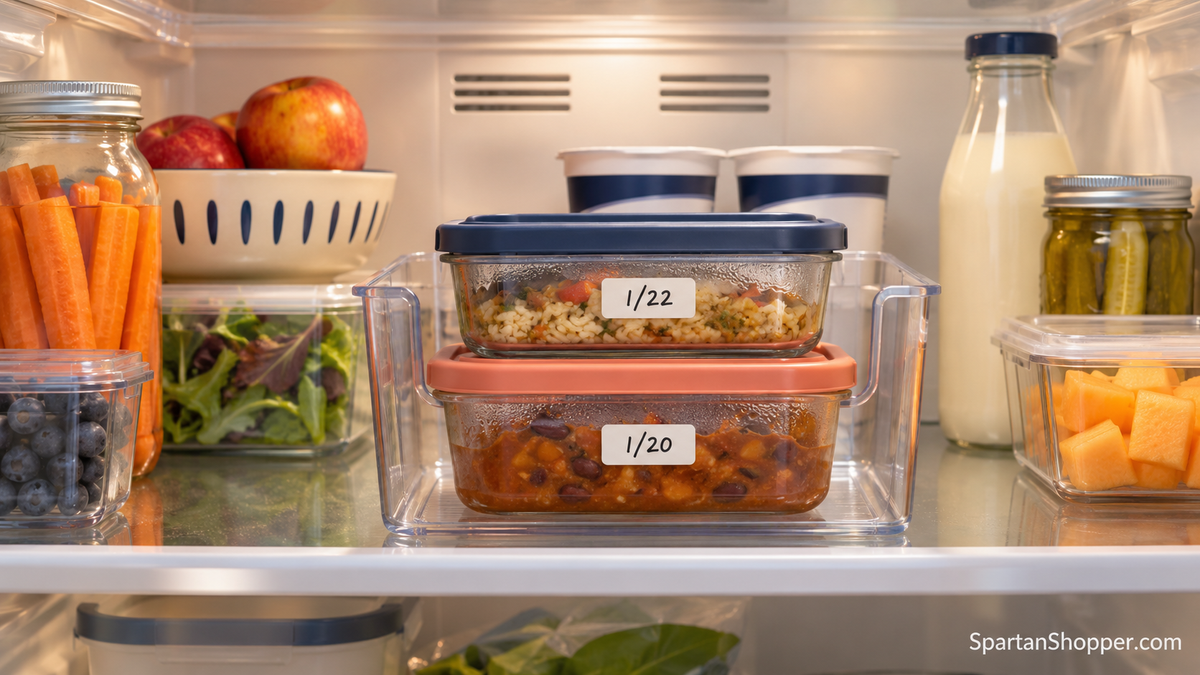
Build a Use-First Fridge Shelf Under $50
SpartanShopper Editorial Team · November 11, 2026
Create a visible fridge zone for food to use soon. Check a small bin’s dimensions, label dates and keep the whole setup below $50.
Give food that needs using soon one visible place at the front of the fridge. A shallow bin can help, but the useful part is the date label and the habit of checking it before opening something new.
Disclosure: SpartanShopper may earn a commission from qualifying purchases through links on this page, at no extra cost to you. As an Amazon Associate, we earn from qualifying purchases.
Plan the $50 limit
The selected small bin was $7.16 on November 11, 2026, sold and shipped by Amazon.com. Allow up to $5 for labels if you need them; existing food containers and refrigeration are reused. The $12.16 plan leaves $37.84 for tax and delivery within a $50 ceiling. Prices and shipping eligibility can change. Check the exact one-pack and final total before buying.
| Selected item or allowance | Price or allowance |
|---|---|
| iDesign small clear fridge bin, one pack | $7.16 checked price |
| Date labels or suitable marker; reuse what you own | Up to $5 allowance |
| Bin plus optional labeling allowance | $12.16 |
| Remaining within $50 for tax and delivery | $37.84 |
Choose a shelf you actually see
Pick an easy-to-reach shelf for covered, ready-to-eat food. Keep raw meat separate in suitable leak-containing storage. Measure the shelf depth, door clearance and the space needed to lift the bin out; leave refrigerator vents clear. A tall container that blocks everything behind it recreates the problem.
The selected iDesign clear bin is listed at 10 inches long, 4 inches wide and 3 inches high. That is a narrow footprint for small yogurt pots or suitably sized sealed packages; the usable interior is smaller. Measure your actual food containers before buying. Larger leftover tubs can stay directly on the designated shelf beside it. The bin groups containers; it does not replace their lids. Clean it with mild soap and water, not in the dishwasher.
Label the food, not just the basket
Write the contents and preparation or opening date on each container. “Use first” is a reminder, not a safety assessment. USDA advises refrigerating perishable leftovers within two hours, or one hour when the temperature is above 90°F, and using refrigerated leftovers within three to four days. Keep the refrigerator at 40°F or below. If you cannot establish how food was stored, the bin does not make it safe.
Put a small meal note on the fridge: for example, rice and vegetables for tomorrow’s lunch. At the next grocery unpack, check the bin before adding newer food. Keep the group small enough that every label is visible.
Put the plan into practice
1. Empty only the chosen shelf; check food dates and storage history before returning anything.
2. Group the suitable covered items in the measured bin and face their labels forward.
3. Before planning a meal, inspect the use-first group and move appropriate portions to the freezer while they are still safe.
Try this before buying
Start with a designated front corner and labels you already own. Buy a bin only if pulling the group out makes the food noticeably easier to find.
Related guides
7 Small Pantry Organization Ideas That Fit Your Shelves
Source and instructions
USDA guidance on leftover storage
AI-generated editorial illustration. The setup and unbranded objects are illustrative, not photographs of the linked products.
Get Exclusive Coupon Codes
Deals and discount codes delivered to your inbox. No spam.
Get a Free Healthy Snack Box
Gluten-free, sugar-free, better-for-you snacks. No purchase required.
Claim My Free BoxSponsored offer. No purchase necessary.