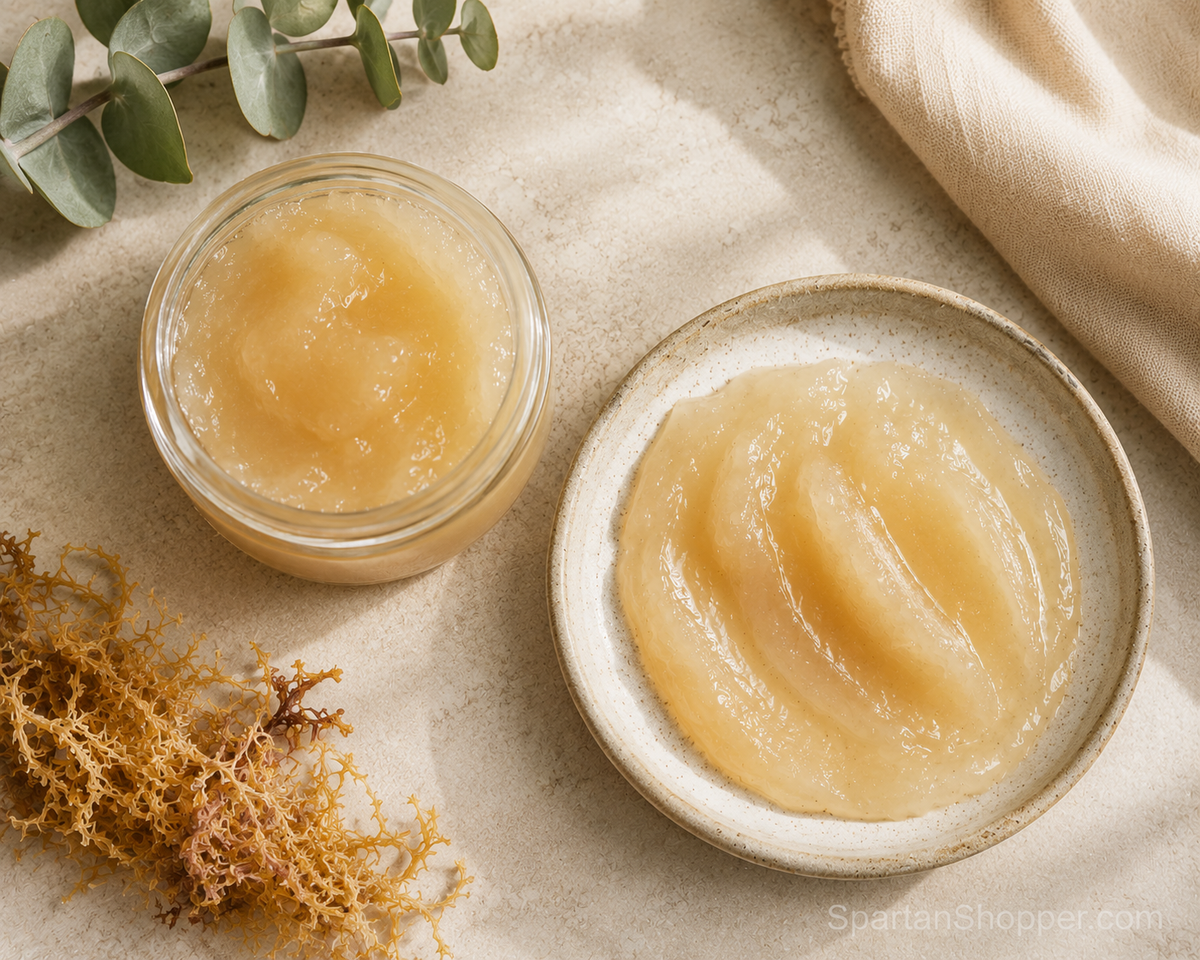
Sea Moss for Skin: What It Actually Does (and What It Doesn't)
SpartanShopper · July 25, 2026
Sea moss is a genuinely good topical humectant and a decent source of skin-relevant nutrients. It is not a treatment for acne, pigmentation, or aging — here is where the evidence stops and the marketing starts.
Sea moss shows up in skincare conversations constantly, usually with claims that outrun the evidence by a wide margin. The useful version of this topic separates two very different things: what sea moss does when you put it on your skin, and what it does when you swallow it. Those are not the same claim, and only one of them has an obvious mechanism.
Disclosure: SpartanShopper participates in the Amazon Associates Program. We may earn a small commission on qualifying purchases at no extra cost to you.
The Ingredients That Matter for Skin
Sea moss is roughly 90% water once rehydrated, and the rest is where the interest lies. Three components come up repeatedly:
- Mucilage. The gel-forming polysaccharide that gives sea moss its texture. On skin it behaves as a humectant — it binds water and holds it at the surface, the same broad mechanism as glycerin or hyaluronic acid, though far less studied.
- Sulfur compounds. Sulfur is genuinely involved in collagen cross-linking and keratin structure. This is the basis of most "sea moss builds collagen" claims — the nutrient is real, the leap from dietary sulfur to visible collagen change is not established.
- Trace minerals and vitamin A. Zinc and vitamin A both have well-documented roles in skin repair and cell turnover. Sea moss contains them, though in amounts that vary enormously between harvests.
Topical Sea Moss: The Part With an Obvious Mechanism
Applied to skin, sea moss gel does something you can feel in a single use. The mucilage forms a thin, flexible film that slows water loss from the skin surface, which is why skin feels softer and plumper after a mask. That is not a mystical effect — it is what humectants do, and it is the same reason a sheet mask works.
The practical version: a thin layer of plain gel, 10 to 20 minutes, rinsed with lukewarm water, two or three times a week. Refrigerate the gel between uses and treat it like food, because that is what it is — it spoils.
One caution worth stating plainly. Sea moss is a marine product, and while true allergy is uncommon, reactions do occur. Patch-test on your inner forearm and wait 24 hours before putting it anywhere near your face, particularly if you react to shellfish or iodine.
Oral Sea Moss: The Part That Gets Oversold
The claim that eating sea moss transforms skin is where the evidence thins out dramatically. There is very little human research testing oral sea moss against any skin outcome — not because studies failed, but because they have largely not been run.
What remains defensible is narrower and less exciting: skin is nutrient-dependent, deficiencies in zinc, vitamin A, and iron show up in skin first, and sea moss supplies all three. If your diet was short on them, correcting that will help your skin. If it was not, adding sea moss is unlikely to change anything visible.
That is a real benefit. It is just a nutritional one, not a dermatological one, and the distinction matters when you are deciding what to spend money on.
Sea Moss Against Actual Skincare Actives
If your goal is a specific skin outcome, sea moss is not the most direct tool for any of them. Retinoids have decades of evidence for texture and fine lines. Vitamin C has strong evidence for pigmentation. Niacinamide has good evidence for barrier function and redness. Sea moss has none of that depth behind it.
Where it earns a place is as a gentle hydrating layer rather than an active — closer in function to a hydrating essence than a treatment step. If you are building a routine around actives that actually change skin, our guide to the best Korean skincare products covers the categories where the evidence is strongest, and sea moss slots in underneath them rather than replacing any of them.
A Realistic Way to Use It
Use the gel topically if you like how it feels and want a cheap, gentle hydrating step — that use is well matched to what sea moss actually does. Take it orally for its broader nutritional profile, thyroid and mineral support included, and treat any skin improvement as a bonus rather than the reason.
Before making it a daily habit either way, the iodine content deserves attention — sea moss is one of the most iodine-dense foods available, and the ceiling is lower than most people assume. Our guide to sea moss side effects covers where that ceiling sits and who should stay well below it.
Frequently Asked Questions
Does eating sea moss actually improve your skin?
The honest answer is that the direct evidence is thin. Sea moss supplies sulfur, zinc, and vitamin A — all of which skin genuinely uses — but almost no human trials have tested oral sea moss against a skin endpoint. What you can say fairly is that it fills nutrient gaps that affect skin; what you cannot say is that it clears acne or erases wrinkles.
Is sea moss better applied topically or taken orally?
Topically, sea moss behaves as a humectant — the mucilage holds water against the skin, which is a real and immediate effect you can feel. Orally, any skin benefit is indirect and slow, working through nutrition rather than the skin barrier. If your goal is hydration specifically, a topical gel does more, faster.
Can sea moss gel be used as a face mask?
Yes, and it is one of the more popular uses. Raw gel applied for 10–20 minutes and rinsed off leaves skin noticeably softer. Patch-test first: sea moss is a marine product and shellfish-adjacent cross-reactions, while uncommon, do happen.
How long before sea moss shows any effect on skin?
For topical hydration, immediately — that is the humectant at work. For anything nutritional, think in months rather than weeks, and only if you were short on those nutrients to begin with. Anyone promising a visible transformation in days is selling something.
The Bottom Line
Sea moss is a decent topical humectant and a reasonable source of skin-relevant nutrients. It is not a treatment for acne, pigmentation, or aging, and the confident claims that it is do not have research behind them. Used for what it actually does — hydration on the surface, nutrition from the inside — it is a fair addition to a routine. Used as a replacement for proven actives, it will disappoint.
For the full picture on forms, dosing, and which products are worth buying, start with our sea moss supplement guide.
Disclosure: SpartanShopper participates in the Amazon Associates Program. We may earn a small commission on qualifying purchases at no extra cost to you. This article is for informational purposes only and is not a substitute for professional medical advice.
Get Exclusive Coupon Codes
Deals and discount codes delivered to your inbox. No spam.
Get a Free Healthy Snack Box
Gluten-free, sugar-free, better-for-you snacks. No purchase required.
Claim My Free BoxSponsored offer. No purchase necessary.