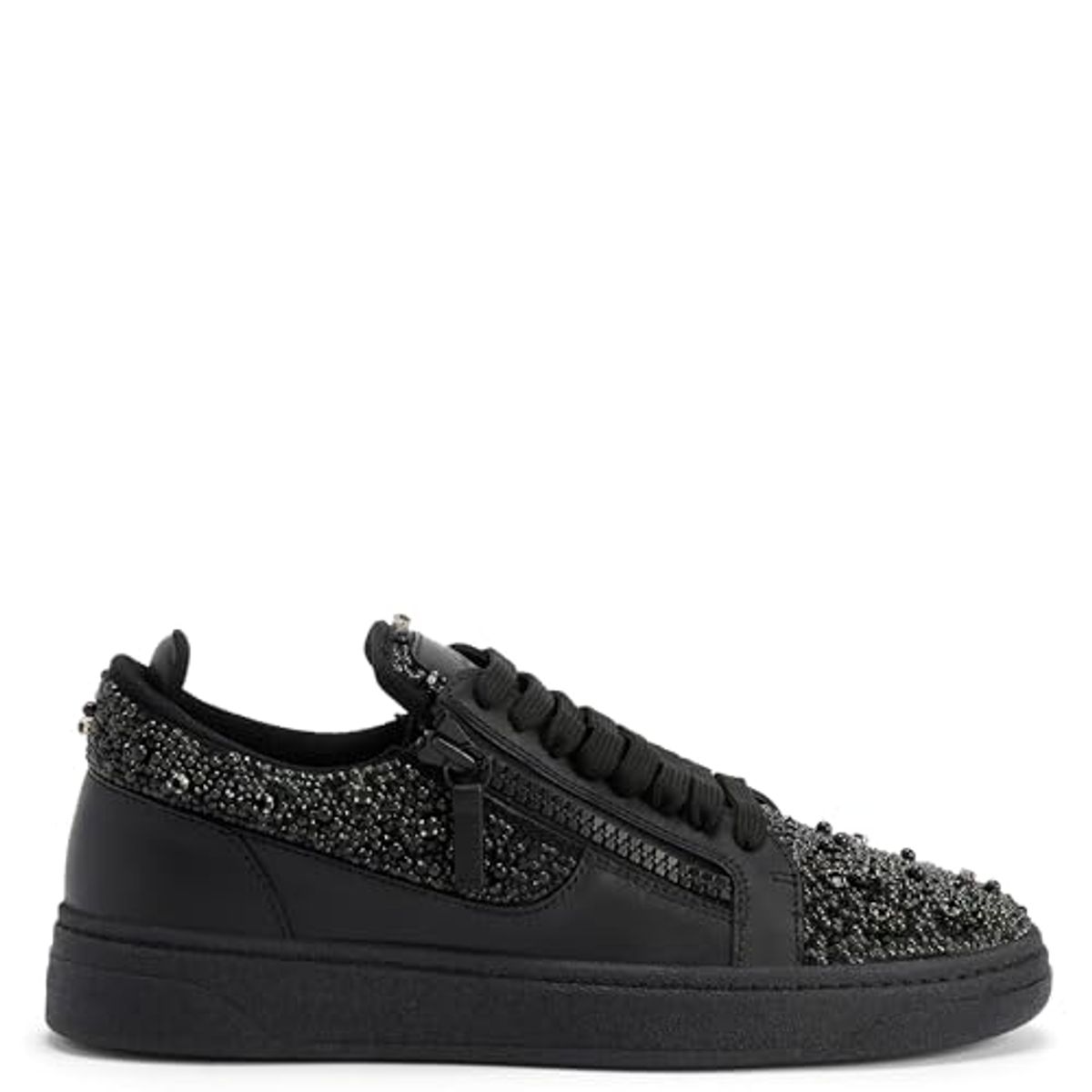
Is Giuseppe Zanotti (or Any Luxury Brand) on Amazon Actually Authentic? How Amazon Luxury Stores Works
SpartanShopper · July 31, 2026
Amazon has a real counterfeit problem in its general marketplace — but Amazon Luxury Stores is a separate, brand-guaranteed system. Here's how to tell the difference before you buy designer goods on Amazon.
If you've ever hovered over an "Add to Cart" button on a $1,000 pair of Giuseppe Zanotti sneakers and thought "wait, is this actually real?" — you're not being paranoid. Amazon's reputation with counterfeits is well-earned in parts of its marketplace, and knowing the difference between a random third-party listing and an official Amazon Luxury Stores boutique is the single most useful thing you can learn before buying designer goods there.
Disclosure: SpartanShopper participates in the Amazon Associates Program. We may earn a small commission on qualifying purchases at no extra cost to you.
The Short Answer
Yes — if the item is sold through Amazon Luxury Stores (also called Amazon Luxury), it's guaranteed authentic by the brand itself. Amazon's own customer service documentation states it plainly: "Luxury brands and retailers guarantee the authenticity of every item sold in Amazon Luxury. Whether you shop directly from a brand's dedicated storefront or from a curated edit featuring an assortment of brands, all Amazon Luxury items are verified as authentic by the seller."
That's a materially different guarantee than what covers a random product you find by searching a brand name in Amazon's regular search bar — which is where most of the platform's real counterfeit problems have historically lived.
Why This Question Even Exists
Amazon has genuinely struggled with counterfeits in its standard third-party marketplace, and it's worth naming that plainly rather than glossing over it. A big part of the historical problem was commingled inventory — Amazon's Fulfilled by Amazon (FBA) program used to pool identical-SKU inventory from multiple sellers into the same warehouse bins. If one seller in that pool shipped counterfeit units, a customer could receive a fake even when buying from a legitimate seller, because Amazon's system didn't distinguish which physical unit came from which seller.
Amazon has been closing this gap. The company reported investing more than $1 billion in 2024 into AI-driven anti-counterfeit detection, and says its systems now block more than 99% of suspected counterfeit listings before a customer ever sees them. Amazon has also announced it will end commingled FBA inventory entirely by March 31, 2026, which removes the specific mechanism that let fakes slip into legitimate sellers' shipments.
That's real progress, but it applies to the general marketplace — the sprawling, anyone-can-sell ecosystem where a search for "designer handbag" can surface hundreds of third-party listings of wildly varying legitimacy. Amazon Luxury Stores is a different, separate system built specifically to avoid that problem altogether.
What Makes Amazon Luxury Stores Different
Amazon Luxury Stores isn't just a filter on regular search results — it's a distinct shopping destination with its own storefronts, built in partnership with the brands themselves. A few structural facts matter here:
Access is by invitation, not open listing. Brands don't just sign up and start selling the way a regular third-party Amazon seller can. Luxury brands are selected and onboarded directly, and each gets a dedicated, brand-controlled storefront — the digital equivalent of a boutique, complete with brand-produced photography and video rather than generic marketplace listing photos.
The brand or retailer — not a random third party — guarantees authenticity. Per Amazon's own policy, every item sold through Amazon Luxury is verified as authentic by the seller, and that seller is the brand or an authorized retailer, not an anonymous marketplace account.
Pre-loved (resale) items go through named authentication partners. For secondhand luxury goods sold on the platform, Amazon partners with established authentication services — What Goes Around Comes Around, Rebag, myGemma, and Reklaim — specifically to verify these items before they're listed. Pre-loved items won't necessarily arrive with original dust bags or authenticity cards, but they've been independently checked regardless.
Orders are processed and shipped separately from standard Amazon purchases, and every Luxury order is covered by a 30-day return window with free return shipping (items must come back with tags and packaging intact).
How to Actually Tell You're Buying From Amazon Luxury (Not Just a Search Result)
This is the practical part most people skip. Searching a designer brand's name in Amazon's main search bar does not reliably put you inside the Luxury Stores experience — it can just as easily surface a random third-party listing that happens to use the brand name in its title. Here's how to know you're in the right place:
- Look for the "Amazon Luxury" label on the product page or in the breadcrumb/category line — genuine Luxury Stores listings are explicitly tagged this way, not just categorized under "Clothing, Shoes & Jewelry" like a standard listing.
- Check the seller field. On a true Luxury Stores item, the seller is the brand itself or a named authorized retailer (for example, Saks Fifth Avenue's curated assortment appears inside Amazon Luxury under "Saks on Amazon") — not a generic third-party storefront name you don't recognize.
- Navigate in through the Luxury Stores hub itself rather than general search, if you want certainty. Typing "Amazon Luxury" into the search bar, or finding it under Programs & Features in the main menu, takes you to the actual boutique experience rather than a mixed bag of search results.
- Be suspicious of steep, unusual discounts on iconic pieces outside the Luxury hub. A markdown inside Amazon Luxury Stores (verified, brand-guaranteed) is a different thing entirely from an unusually cheap listing for the same item sitting in general marketplace search — the latter is exactly the pattern counterfeiters use to move fakes.
What This Doesn't Cover
To be direct about the limits here: this guarantee applies specifically to items sold through the Amazon Luxury Stores program. It does not retroactively make every product listing on Amazon that happens to mention a luxury brand name safe — generic marketplace search remains a mixed environment, improving but not perfect, and the commingling fix doesn't fully take effect until March 31, 2026. If you're buying a designer item and you're not sure whether you're inside the Luxury Stores experience or a regular listing, the safest move is to check for the "Amazon Luxury" designation directly rather than assume.
Frequently Asked Questions
Does the Amazon Luxury authenticity guarantee cover used or vintage items?
Yes — pre-loved items sold through Amazon Luxury are authenticated by Amazon's named partners (What Goes Around Comes Around, Rebag, myGemma, Reklaim) before listing, even though they may not include original packaging or paperwork.
Is Amazon Luxury the same as buying directly from the brand's own website?
Not exactly, but functionally similar in terms of authenticity — the brand controls its own storefront and guarantees the item, even though the transaction happens on Amazon's platform with Amazon's payment processing, shipping, and customer service layered on top.
What if I receive a Luxury Stores item and suspect it's not authentic?
Amazon Luxury orders qualify for a 30-day return window with free return shipping, separate from standard Amazon return policy. Contact Luxury Stores customer care directly (order support: 1-877-869-2492 or luxurystores-cs@amazon.com) rather than going through general Amazon customer service, since Luxury orders are processed on a separate track.
Why do some designer items on Amazon look so much cheaper than the brand's own site?
Inside Amazon Luxury Stores, discounts reflect genuine brand-approved markdowns (seasonal sales, past-season inventory), the same kind you'd see at an authorized department store. Outside the Luxury hub, in general marketplace search, unusually steep discounts on iconic items are a common red flag for counterfeit or gray-market goods and deserve more scrutiny.
The Bottom Line
The authenticity question has a real, checkable answer: items sold through Amazon Luxury Stores are guaranteed authentic by the brand or authorized retailer selling them, backed by a dedicated return policy and, for resale items, named third-party authentication partners. The risk that gives this question its energy in the first place — Amazon's broader marketplace counterfeit problem — is real, historically documented, and actively being addressed through measures like the end of commingled FBA inventory in 2026. The practical takeaway is simple: shop through the actual Amazon Luxury Stores experience, confirm the "Amazon Luxury" designation and named seller on the product page, and treat unusually discounted designer goods in general search with real skepticism.
Disclosure: SpartanShopper participates in the Amazon Associates Program. We may earn a small commission on qualifying purchases at no extra cost to you. This article is for informational purposes only.
Sources
Get Exclusive Coupon Codes
Deals and discount codes delivered to your inbox. No spam.
Get a Free Healthy Snack Box
Gluten-free, sugar-free, better-for-you snacks. No purchase required.
Claim My Free BoxSponsored offer. No purchase necessary.