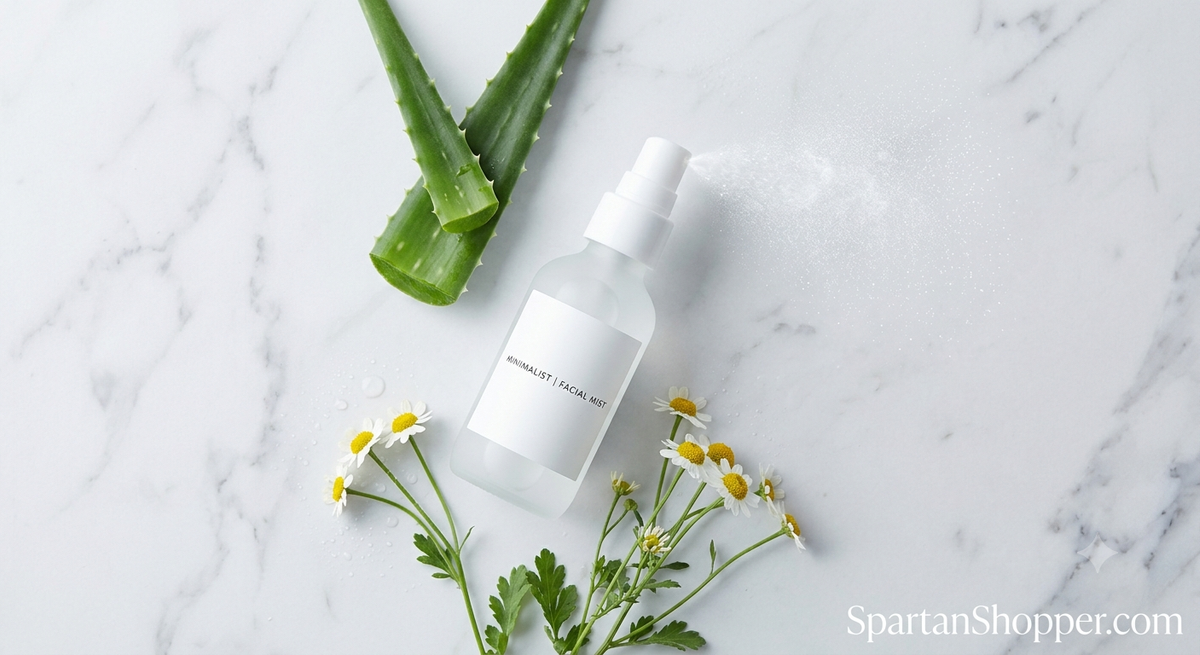
Hypochlorous Acid and Rosacea: What to Know Before Trying a Spray
SpartanShopper · July 18, 2026
Considering a hypochlorous acid facial spray for rosacea-prone skin? Learn how to choose a simple formula, patch test carefully, and know when a dermatologist should guide treatment.
Hypochlorous acid (HOCl) facial sprays are popular with people who have reactive or rosacea-prone skin because the formulas can be very simple. That does not make an HOCl spray a proven treatment for rosacea. If you want to try one, treat it as a cosmetic routine choice: use a simple product, introduce it carefully, and keep evidence-based rosacea care and professional advice at the center of your plan.
Quick answer: can hypochlorous acid treat rosacea?
No strong evidence establishes an over-the-counter HOCl spray as a treatment for rosacea. Rosacea has several forms and can resemble other conditions, so persistent redness, burning, bumps, or eye symptoms deserve a diagnosis. The American Academy of Dermatology describes rosacea care as trigger management, gentle skin care, sun protection, and treatments chosen for the individual signs and symptoms.
Read the American Academy of Dermatology overview of rosacea treatment.
What an HOCl spray can and cannot do
A minimal, fragrance-free mist may be easier for some people with sensitive skin to tolerate than a multi-ingredient toner or fragranced product. Tolerance is individual, however: a product can still sting, burn, or trigger a flare. An HOCl spray will not diagnose rosacea, remove visible blood vessels, or replace a prescribed treatment.
How to introduce a spray carefully
- Choose a facial product with a short, fragrance-free ingredient list. Do not use household disinfectant or cleaning sprays on the face.
- Patch test on a small area first. Stop using it if you feel burning, persistent stinging, swelling, or worsening redness.
- Add one new product at a time so you can identify what your skin tolerates.
- Keep the basics steady: a gentle cleanser, moisturizer, and broad-spectrum SPF 30 or higher.
Rosacea-friendly routine basics
The American Academy of Dermatology advises people with rosacea to avoid known triggers and irritating ingredients. It specifically notes that fragrance-free products and mineral sunscreen with zinc oxide, titanium dioxide, or both are less likely to irritate sensitive skin. Sunscreen and a simple moisturizer do more for routine consistency than chasing a new active.
See the AAD guide to preventing rosacea flare-ups.
When to see a dermatologist
See a dermatologist for persistent flushing, acne-like bumps, painful skin, visible vessels that concern you, or eye symptoms such as dryness, irritation, light sensitivity, or a gritty feeling. Seek urgent care for a severe swelling or allergic reaction. Product experimentation should not delay diagnosis or treatment.
Continue your skin-care research
Read the general hypochlorous acid skincare guide. It explains how to compare spray formulas without treating them as medication.
Explore the rosacea resource center from the AAD.
Disclosure: SpartanShopper participates in the Amazon Associates Program and may earn a commission from qualifying purchases at no extra cost to you. This article is informational and is not medical advice.
Get Exclusive Coupon Codes
Deals and discount codes delivered to your inbox. No spam.
Get a Free Healthy Snack Box
Gluten-free, sugar-free, better-for-you snacks. No purchase required.
Claim My Free BoxSponsored offer. No purchase necessary.