How to Stay Warm Outside: A Practical Layering Guide
SpartanShopper Editorial · October 10, 2026
Learn how to stay warm outside with a practical layering system for work, walks, and winter errands—plus the details that keep cold and damp out.
You can buy a warmer coat and still be freezing by the time you get home. Often the problem is what happens underneath: a damp shirt against your skin, a gap at your wrists, or wind cutting through your middle layer. To stay warm outside, build an outfit that handles moisture, holds warmth, and blocks the weather. Then adjust it as you move.
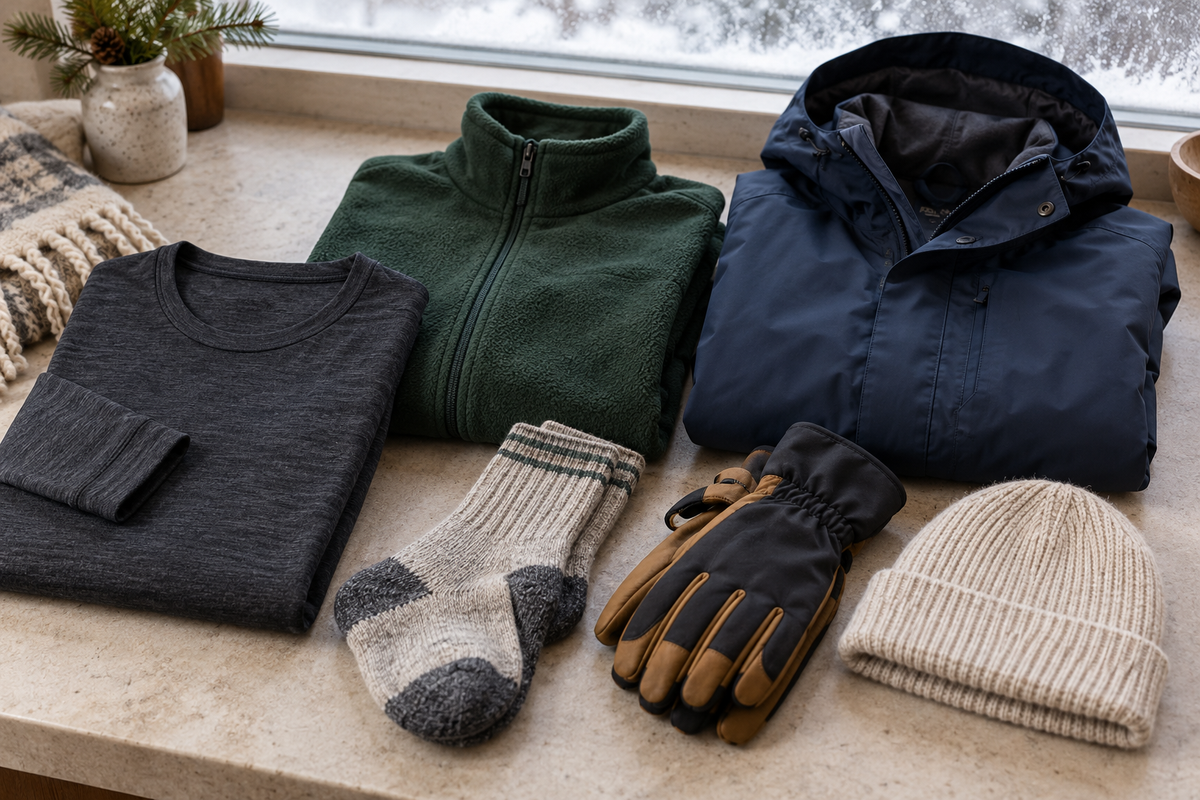
Start here: choose a wool or synthetic base layer, add fleece or another insulating layer, and carry a shell for wind and rain. If you only change one thing today, replace a damp cotton layer or a pair of wet socks first.
Disclosure: SpartanShopper may earn a commission from qualifying purchases through product links in this guide, at no extra cost to you.
Why the three-layer system works
A single heavy coat is hard to adjust. Walking, working, or chasing a child can make you sweat; standing still afterward makes that moisture feel cold. Layers give you a way to shed heat before you get damp and add it back when your pace slows. OSHA recommends at least three loose-fitting layers for cold work: an inner moisture-managing layer, an insulating middle, and an outer layer that blocks wind and rain while allowing ventilation.
1. Start with the layer against your skin
A base layer has one job: keep sweat from sitting next to you. Wool and many synthetics retain more insulating value when damp than cotton. Choose a close fit that does not bind, and match its weight to your activity. A heavyweight set may feel great at a game and miserable on a fast uphill walk.
Two base-layer starting points
If your usual tee feels chilly after you move, a top-and-bottom merino set is an easy way to change the part of your outfit that matters first. This Merino.tech men’s set comes in multiple weights; check the selected weight and size before buying, because the warmest version is not automatically the most comfortable for active work. Compare the men’s merino set
Want the same head-to-toe approach in a women’s cut? The Merino.tech women’s set lets you start with one coordinated base instead of guessing whether separate pieces will feel right together. Check the weight and size chart for the exact variant shown on the listing. See the women’s merino options
2. Add warmth you can take off
Your middle layer traps warm air. Fleece works well for daily use because you can unzip it when you pick up the pace and put a shell over it when the wind rises. It is not your rain protection. If you expect a long period of standing still, bring a warmer insulating layer or a dry backup.
Fleece for different fits and routines
If you want one layer to keep by the door for errands, dog walks, and chilly offices, Columbia’s women’s Benton Springs Full Zip is a straightforward fleece to throw on or take off. Its appeal is versatility; add a weather shell when the forecast turns wet or windy. Check Benton Springs sizes and colors
If you prefer a simple men’s mid-layer you can open as soon as you warm up, Columbia’s Steens Mountain 2.0 Full Zip fills that role. Put it under a roomy outer jacket for cold wind; fleece alone will not seal out rain. See the men’s Steens Mountain fleece
Kids often go from standing still to running hard in minutes. Columbia’s Youth Steens Mountain II is a removable fleece for that stop-and-start routine. Check the child’s size, leave room to move, and pack a dry spare for snow or wet recess. Check youth fleece sizing
If a short fleece leaves a cold gap when you sit, bend, or wait outside, Columbia’s Benton Spring II Long Hoodie offers more coverage and a hood. The listing we checked showed extended sizes through 3X. Choose it for the longer fit, then add a shell when the weather calls for one. See the long hoodie and size range
3. Stop wind and water at the outside
The outer layer matters most when your warm fleece meets cold wind or wet snow. Look for a hood, weather protection, and enough room to keep the insulation underneath from being compressed. If you arrive sweaty, open a vent or zip before you get chilled.
A fleece may be all you need for a dry walk, but it is a poor rain plan. Columbia’s women’s Arcadia II is a waterproof shell to wear over your own warm layer. Check the size with that layer in mind; a snug shell can flatten the insulation you bought it to protect. Check the Arcadia II shell
The small gaps that make a big difference
Cold toes and fingers can send you indoors even when your core feels fine. Change wet socks promptly, check that boots have room for warm socks without squeezing your feet, and carry a spare pair of gloves. A hat or hood and a face covering can help protect exposed skin when wind chill is severe.
If your everyday socks get damp during a long shift or walk, a merino-blend hiking sock is a practical place to upgrade. Time May Tell’s cushioned socks are one option; check pack count, cushioning, and boot fit rather than buying on wool content alone. See the merino sock pack
Need to grip tools, a leash, or a steering wheel in wet cold? toolant’s waterproof winter work gloves favor dexterity over the bulk of mittens. Check fit and task suitability first. For severe cold when you do not need finger movement, mittens may be warmer. Compare the waterproof work gloves
When extra heat makes sense
Heated clothing is most useful when you spend long stretches outside without moving much. It still needs dry layers and weather protection around it. Check exactly what comes in the kit, how the battery is carried, and the care instructions before relying on it for a shift or game.
For someone who waits outdoors or does lower-output work, DEWALT’s DCHJ066C1 women’s heated jacket kit is worth comparing with a conventional insulated jacket. The listing we checked included a battery and charger; verify the selected size and kit contents before checkout. See the heated jacket kit
A quick outfit check before you head out
- Moving fast? Start a little cool and unzip before you sweat. Standing still? Add insulation before you feel chilled.
- Wind or precipitation coming? Bring a shell with enough room for your fleece and base layer.
- Wet socks or gloves likely? Pack dry replacements and change them as soon as practical.
- Extreme cold warning? Plan warm-up breaks, limit exposure, and postpone nonessential time outside when conditions are dangerous.
Know when gear is not enough
Numbness, waxy or unusually pale skin, intense shivering, confusion, slurred speech, or unusual sleepiness are reasons to get indoors and seek help as appropriate. Do not rub suspected frostbitten skin or use direct high heat. This guide can help you dress for ordinary cold-weather plans; it cannot make dangerous exposure safe.
The choice that matters most
Build the outfit around what you will actually do. A brisk walker may need a lighter base and easy-to-remove fleece. Someone waiting outside may need more insulation, dry spare layers, and reliable weather protection. Start with the layer that currently lets you down, then check fit and forecast before adding another piece.
Go deeper on a cold-weather decision
Not sure what to wear next to your skin? Compare merino with faster-drying synthetic base layers before picking a fabric. Compare base layers
If your shell works for a quick errand but not steady rain, check when water-resistant is enough and when waterproof construction matters. Choose the right rain jacket
Cold toes inside warm-looking boots? Start with sock moisture and fit before paying for heavier insulation. Fix cold feet
When you need warm hands and usable fingers, choose between gloves, mittens, and liners based on the task. Compare gloves and mittens
Sources and further reading
National Weather Service: Cold Weather Safety Read the NWS guidance
OSHA: Cold Stress Guide Read the OSHA guide
Product availability and prices can change. SpartanShopper participates in the Amazon Associates Program and may earn a commission on qualifying purchases at no extra cost to you. This article is for information only and is not a substitute for professional medical advice.
Get Exclusive Coupon Codes
Deals and discount codes delivered to your inbox. No spam.
Get a Free Healthy Snack Box
Gluten-free, sugar-free, better-for-you snacks. No purchase required.
Claim My Free BoxSponsored offer. No purchase necessary.