How to Dry Wet Boots: Material and Care Checks
SpartanShopper · November 10, 2026
Dry wet boots with the material and care label in mind. Compare airflow, removable liners and an optional dryer without assuming a fixed drying time.
Start drying wet boots by checking their care instructions, opening them to allow airflow and removing insoles or liners only if they are designed to come out. Keep them away from direct heat unless the boot maker explicitly permits the method. The right approach depends on the materials and how wet the boots are; there is no reliable one-size-fits-all drying time.
Affiliate disclosure: SpartanShopper may earn a commission from purchases through links on this page, at no extra cost to you. As an Amazon Associate, we earn from qualifying purchases.
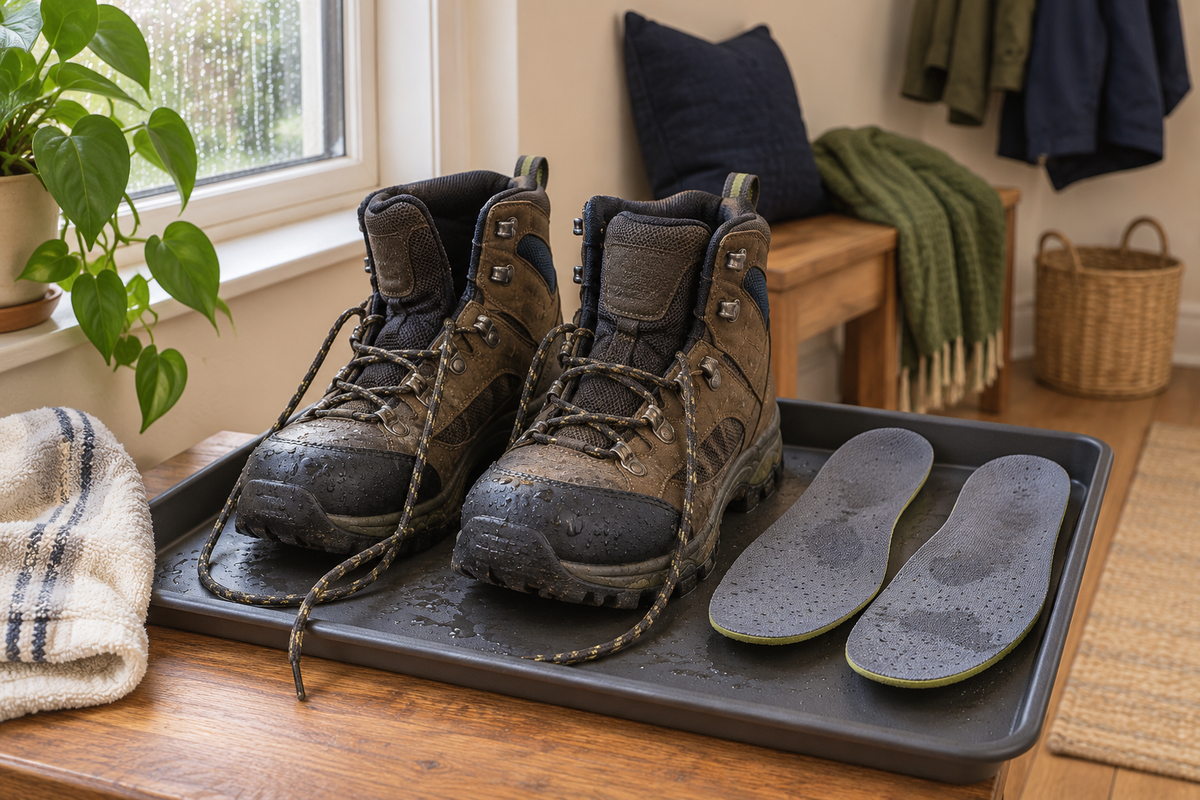
The cover image is an AI-generated editorial illustration, not a photograph of the linked product or proof of a tested project.
Identify what is wet
Water on the outside of a boot is different from a soaked lining or a removable insulated liner. Check the inside, tongue and area beneath a removable insole. Do not pull out a liner that is fixed in place. If the care label is missing, look up the exact model or ask the manufacturer.
Leather, coated fabrics, insulation, adhesives and waterproof membranes can have different care requirements. A generic drying trick cannot establish compatibility with all of them. Keep any electronic heating components or battery-powered insoles separate according to their own instructions.
Open the boot and make room for airflow
Loosen laces and open the tongue as the boot design allows. Place the boots in a ventilated indoor area where they will not block a walkway. Dry removable parts separately when the maker instructs you to do so. Follow the cleaning directions for mud or salt rather than adding an unapproved cleaner.
LOWA’s care guidance, for example, advises air drying in a ventilated place and warns against direct heat because it can damage leather. That is useful evidence against treating a radiator, oven or hot car as a universal drying shortcut. Your own boot’s instructions remain the deciding reference.
Do not confuse faster with appropriate
A hair dryer, heater or fireplace may make the outside feel dry while applying heat the material was not designed to tolerate. Do not choose a method solely because a social post promises an overnight result. If the boots must be worn again soon, an alternate dry pair may be the practical answer.
Check progress at the areas that hold moisture, not only the outer surface. Avoid packing damp boots into closed storage. Once dry, follow the maker’s instructions for any conditioning or water-repellent treatment; do not assume every material needs the same product.
When a purpose-built dryer may help
A compatible footwear dryer can be convenient for frequent wet-weather use, but check both the dryer manual and the boot manufacturer’s guidance. The PEET Original is a convection-style dryer; the maker describes warm-air movement without a fan. It is different from PEET models that offer timers or selectable fan settings.
PEET says drying time depends on material and saturation. Its instructions specify the correct DryPort attachments and unobstructed airflow, and warn against placing the dryer near another heat source. Read the manual supplied with the exact unit for setup and clearance requirements. We have not tested this dryer with your boots and cannot promise a particular drying time.
Check the PEET Original electric shoe and boot dryer
Measure the drying spot before buying
Check the dryer’s complete assembled size, the height of the boots and the required clearances. Confirm the electrical version and outlet requirements for where you live. Keep the cord and wet footwear positioned according to the appliance instructions, away from foot traffic.
If the household has several pairs to dry, count how many the model handles at once. A compact single-pair unit and a larger multi-pair dryer solve different routines. Avoid buying extra attachments before checking compatibility with the exact base.
A wet-weather return-home routine
Put the boots on a suitable tray, remove debris as directed and open them up. Separate removable parts if permitted, then start the approved drying method. Put the care instructions somewhere easy to find. Before the next outing, check that the inside is dry and that the laces, soles and lining are in usable condition.
If moisture repeatedly gets in despite normal use, inspect the boots and consult the maker rather than relying on a dryer to solve a possible leak. Drying and waterproofing are separate problems.
Plan footwear and socks for cold-weather comfort
Sources and product checks
Product information was checked against the exact retail listings and the sources below on November 9, 2026. These are researched planning and buying guides, not hands-on product tests. Check the selected variant, included items, current price and instructions before ordering.
Get Exclusive Coupon Codes
Deals and discount codes delivered to your inbox. No spam.
Get a Free Healthy Snack Box
Gluten-free, sugar-free, better-for-you snacks. No purchase required.
Claim My Free BoxSponsored offer. No purchase necessary.